The event
“AI 阅读大魔方” (AI Reading Cube) was the 2026 Shanghai Book Fair’s special programme at its Jing’an venue, planned and run by CITIC Bookstore’s Xinrui Lab, from August 12 to 18. It showed four ways publishing meets AI: books becoming Skills, content IP growing into apps, authors getting AI avatars, and stories becoming AIGC short films.
The app strand was built around a “Content IP Builder Challenge”: publishers, bookstores and podcasts set challenges, developers built apps, and demoed them on site. The session on the 15th was the book IP challenge and app showcase, and I was one of the speakers. That week I went to three Xinrui Lab sessions: a Skill talk on the first day, and on the third, my own app on stage.
Why Tiaodao
Tiaodao FM was a literary podcast from 2020 to 2024, with more than three hundred episodes. Introducing me, the host said we’d met at an event; I’d listened to over sixty hours of the show, so I was invited to build this.
Tiaodao is woven into my life: when I read Annie Ernaux, I went back to the episode about her. My opening was a question I’d been thinking about: in the age of AI, do we still need to read?
AI reads lots of books for us. We just enjoy the pleasure of reading.
Leave the how-to books to AI; keep literature, philosophy and good writing for yourself.
AI didn’t dig up quotable lines
I first transcribed all of Tiaodao, had AI sort it into themes, and picked a few I care about: work wearing people out, being too tired to read after work (I couldn’t get into Proust), AI and reading, and falling in love.
What AI pulled out of hundreds of hours of conversation wasn’t polished quotes, but “the moments where life suddenly shows through”:
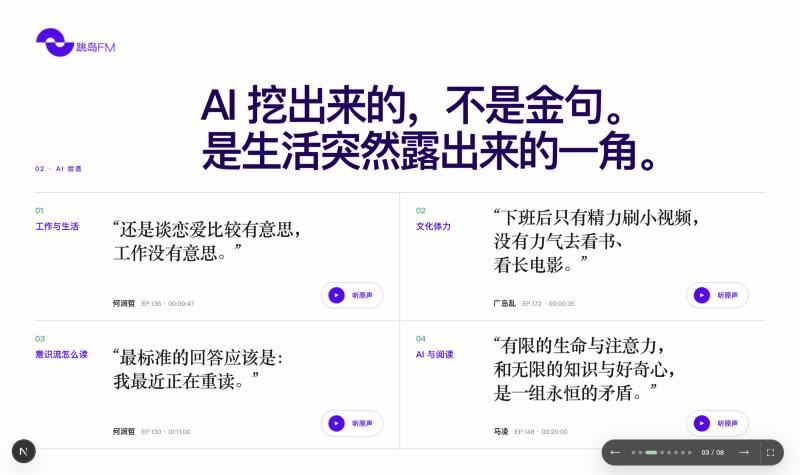
Each line is tagged with its episode and minute, and you can tap to hear the original audio.
How I built it
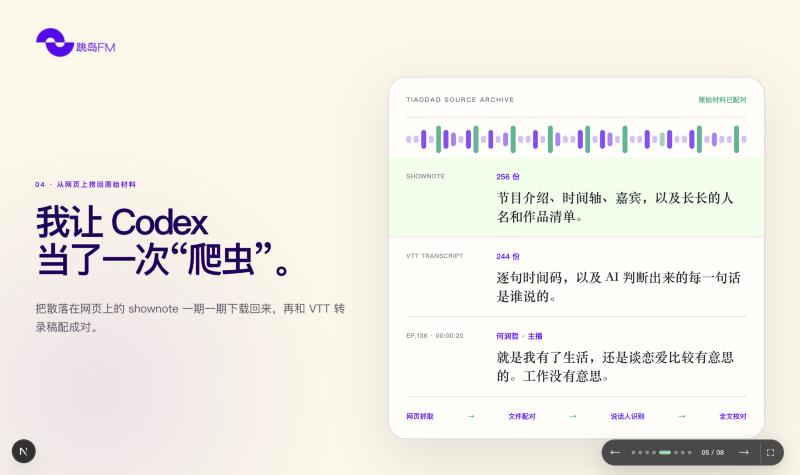
First, bring back the material. I had Codex act as a “scraper”, downloading the show notes scattered across the web episode by episode and pairing them, episode by episode, with transcripts marked with timestamps and speakers. Then we checked the speakers and used AI to clean up the names of authors and works.
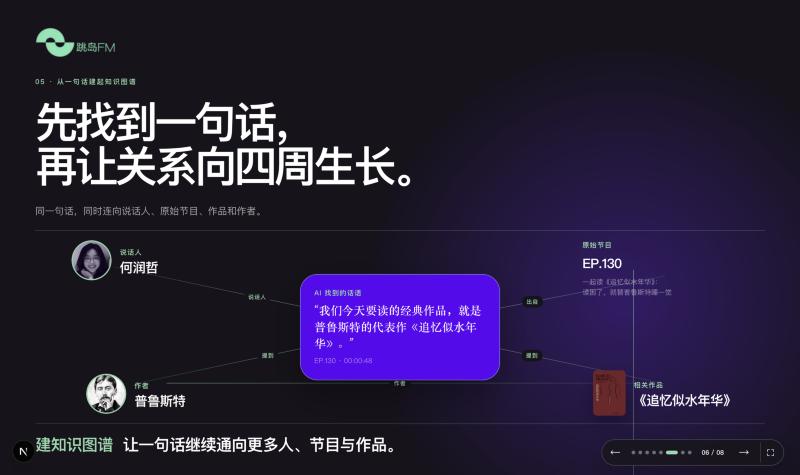
Then, build a knowledge graph from one sentence. One sentence links to its speaker, its episode, and the works and authors it mentions. When host He Runzhe says “The classic we’re reading today is Proust’s masterpiece, In Search of Lost Time”, that sentence connects episode 130 on one side and Proust and his novel on the other. I’d seen someone turn The Paris Review into a network of writers, and wanted to do the same for Tiaodao.
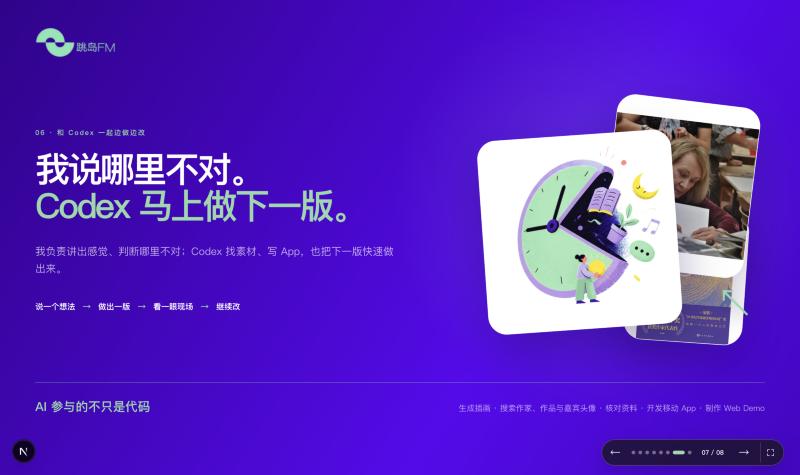
Finally, change as we go. I said how it felt and what was off; Codex found material, wrote the app, and quickly made the next version. AI drew the illustrations and searched for author photos and book covers, which were then checked: “I just sign off on it.” The interface wasn’t good at first; I kept revising it, and in the end the work was taking things away.
I was also honest about the hard parts: there wasn’t much human review, and what AI extracted wasn’t always accurate, “but it can surface things you might never have noticed before.”
What came out of it
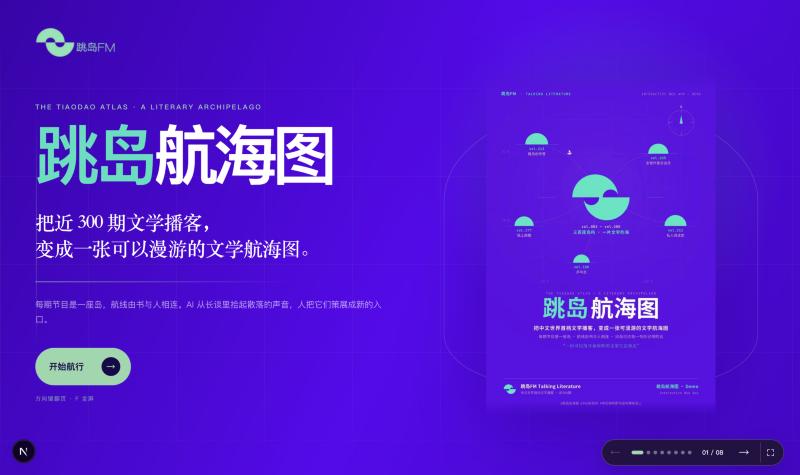
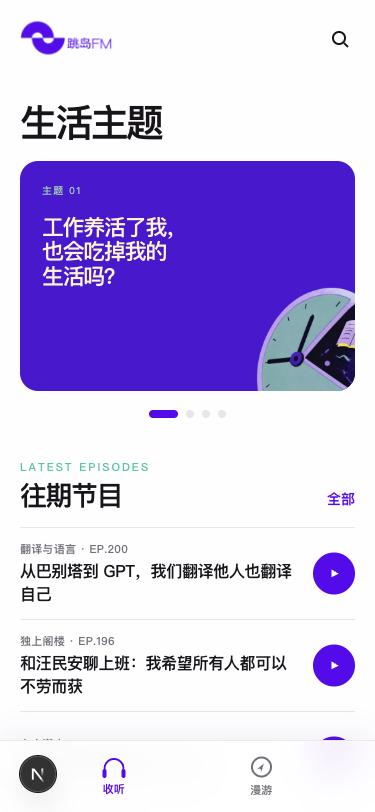
A phone app you enter through a “life theme”: “Work feeds me, but will it also eat my life?” Inside, you see what the hosts said across different episodes, and follow them to the hosts, writers and books. Even the demo “slides” were a web page, and the last one had a QR code for Tiaodao Atlas so everyone could scan in and explore.
On the day
Yu Shi found their own page in the app: “Oh no, I have my own page too.” As people were leaving, someone also brought up host He Runzhe’s line from the show, “Falling in love is more interesting. Work isn’t interesting”, and found it funny. Someone said it could become a “Tiaodao Universe”, and others asked how I came up with it and what I’d built before. The host added that we’d talked about building a website before, and then about “literary islands”: every listener could build an island of their own from these three hundred episodes.
A few days later I wrote:
I also turned my favourite podcast, Tiaodao FM, into an app: answering real questions of life with literature and the islanders’ own words.
Looking back, I thought it was just okay, “but it did get some recognition. Some people like it, and that’s enough; there’s no need to make it perfect.” My biggest takeaway was that my design sense still needs work. How I’ve thought about the app since, and how I’d rebuild it, is on the project page, Tiaodao Atlas.