An online workshop: no formulas, first figure out what kinds of questions machine learning can answer, then build a diabetes prediction model in Azure Machine Learning by dragging and dropping.

I co-hosted with student ambassador Timmy Wen, mentored by MVP Duan Linli. I also wrote out a full script.
What I covered
Machine learning is all around you. The script opened: “You may not know it, but machine learning is right next to you.”
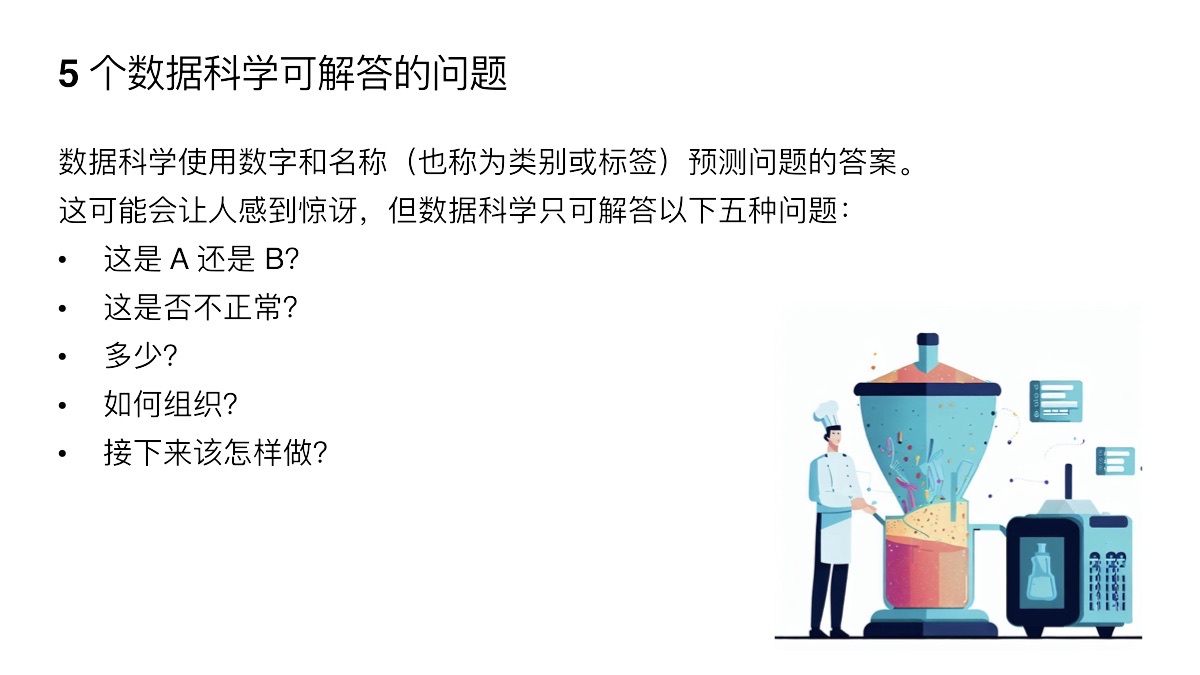
Data science answers only five kinds of questions. Is it A or B (classification)? Is it normal (anomaly detection)? How much (regression)? How is it organised (clustering)? What next (reinforcement learning)?
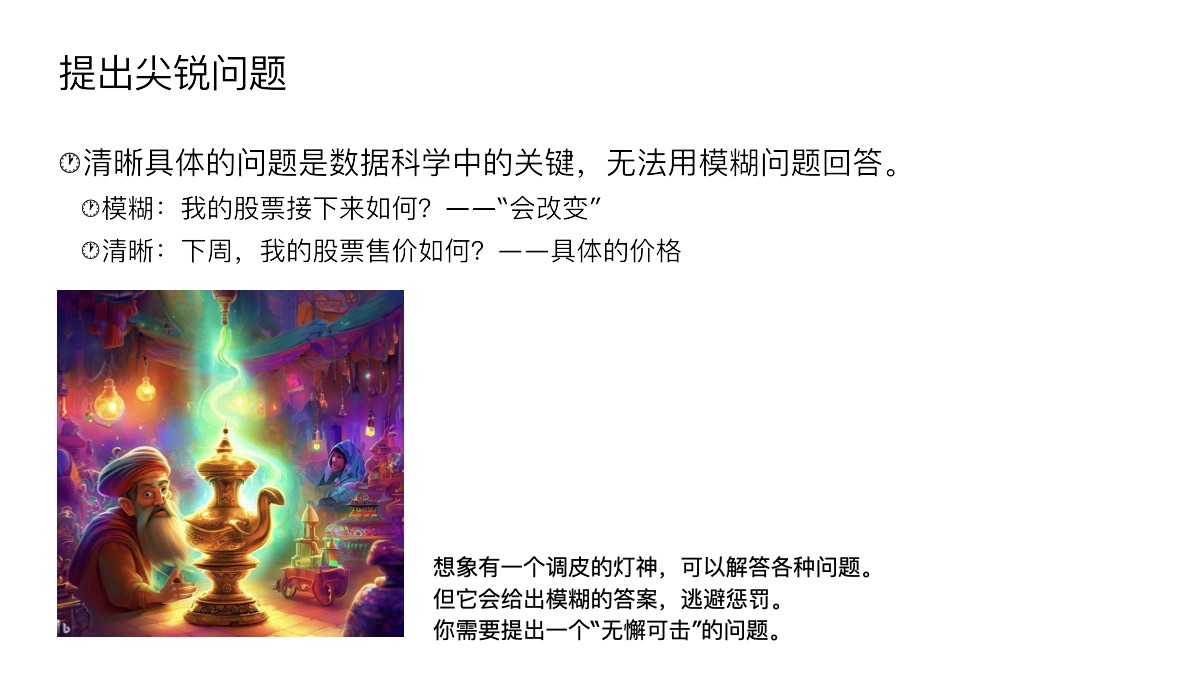
Ask a sharp question. I put Aladdin’s lamp on a slide: the genie can answer anything, but it’s mischievous, and a vague question gets a vague answer. “What will my stock do?” only gets “it will change”; “What will my stock sell for next week?” gets a real answer.
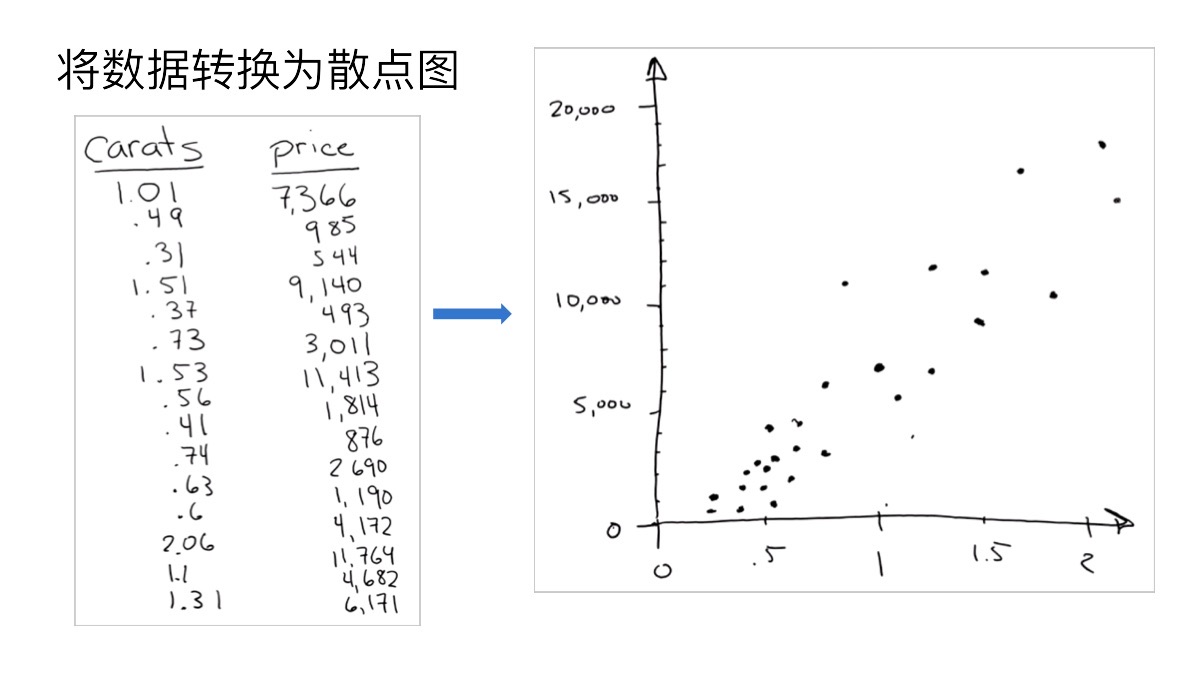
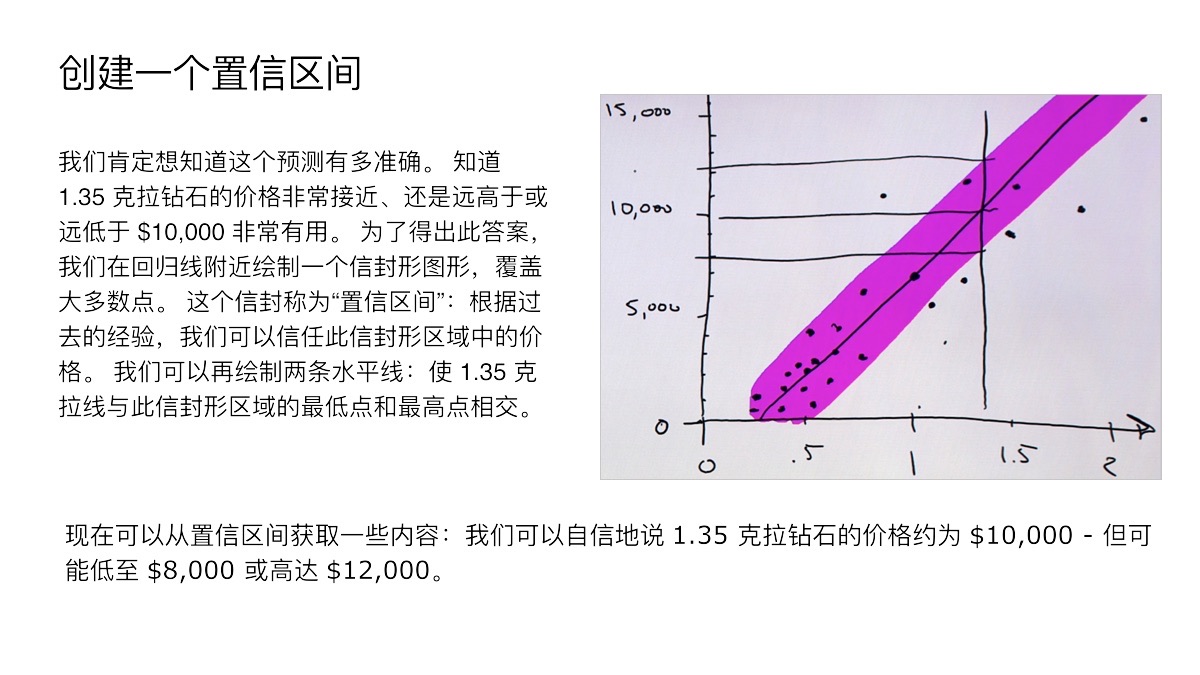
A prediction without a computer. Write down the weight and price of some diamonds, plot them, draw a straight line, and you can estimate that a 1.35-carat diamond costs about $10,000. That’s linear regression. Draw an “envelope” around the line and you get a range you can trust. The charts were drawn by hand.
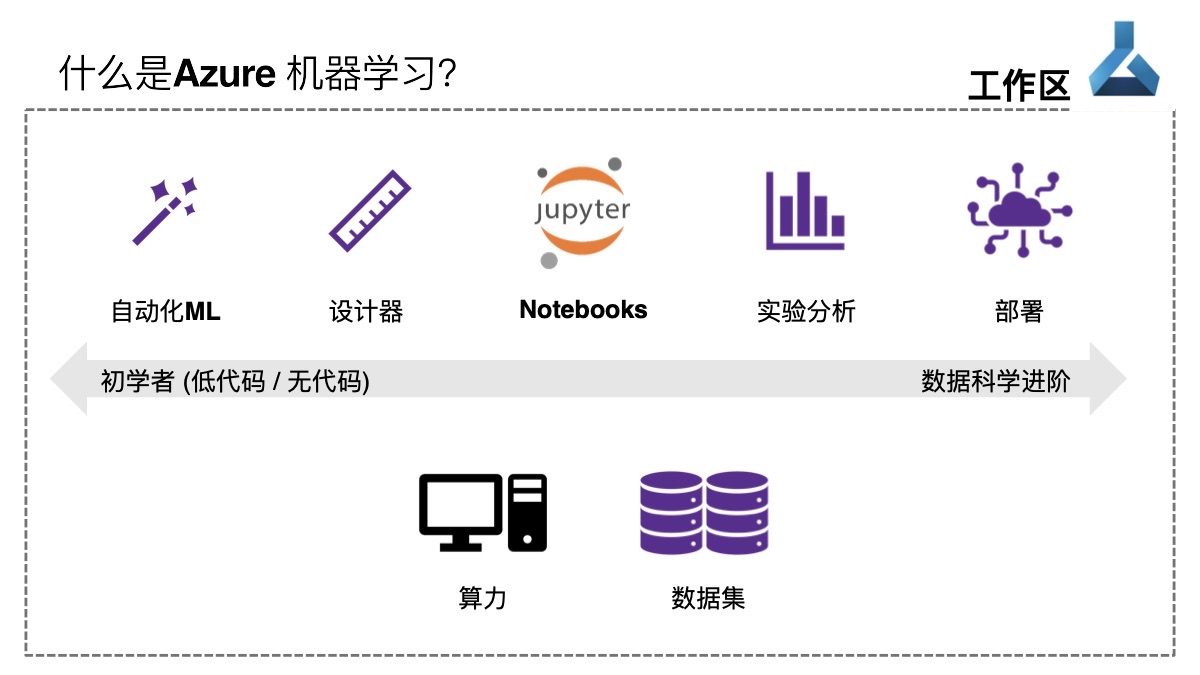
Azure Machine Learning. From low-code to code: Automated ML, the Designer and Notebooks.
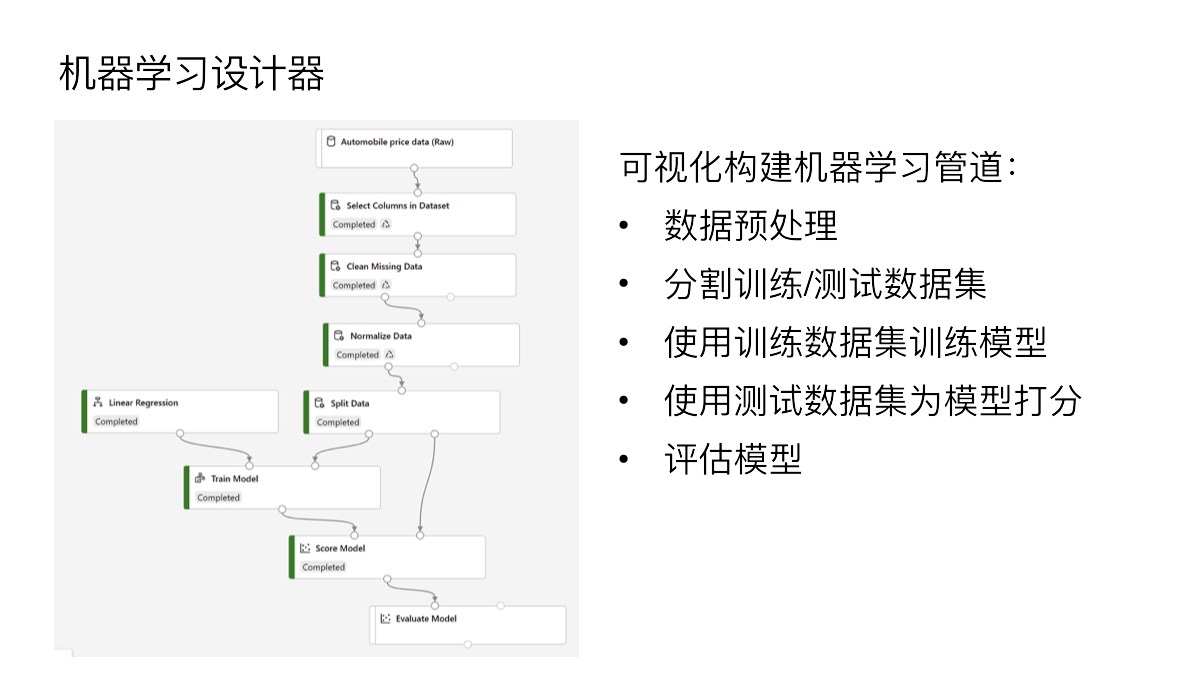
Live demo: predicting diabetes. With health check data from 100,000 people, I built the whole pipeline in the Designer: prepare the data, split training and test sets, train, score, evaluate; then turned it into a real-time inference pipeline, deployed it as an endpoint, and asked the model whether “I” have diabetes.
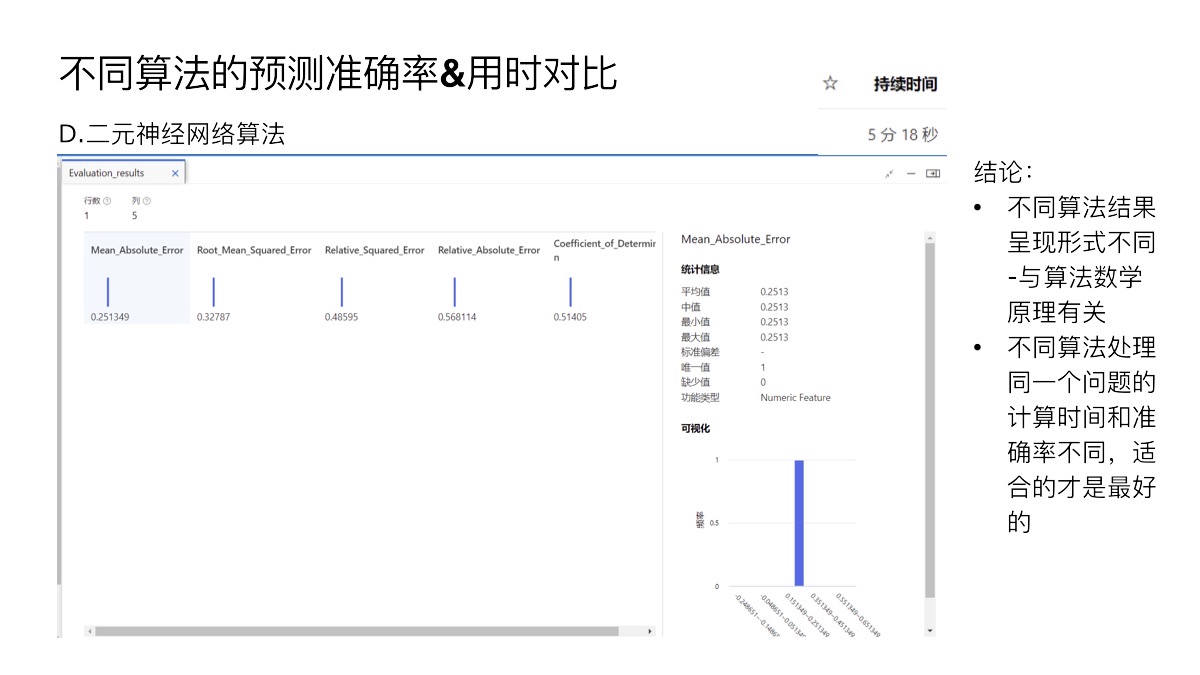
Finally I compared four algorithms’ accuracy and run time. The conclusion: different algorithms take different time and reach different accuracy on the same problem, and “the one that fits is the best”.
I wrapped up with how students can get free Azure credits and the GitHub Student Pack, and handed out $100 Azure Passes from Global Azure 2023.